Understanding Business Technology: A Strategic Guide for 2026
Updated: Apr 21
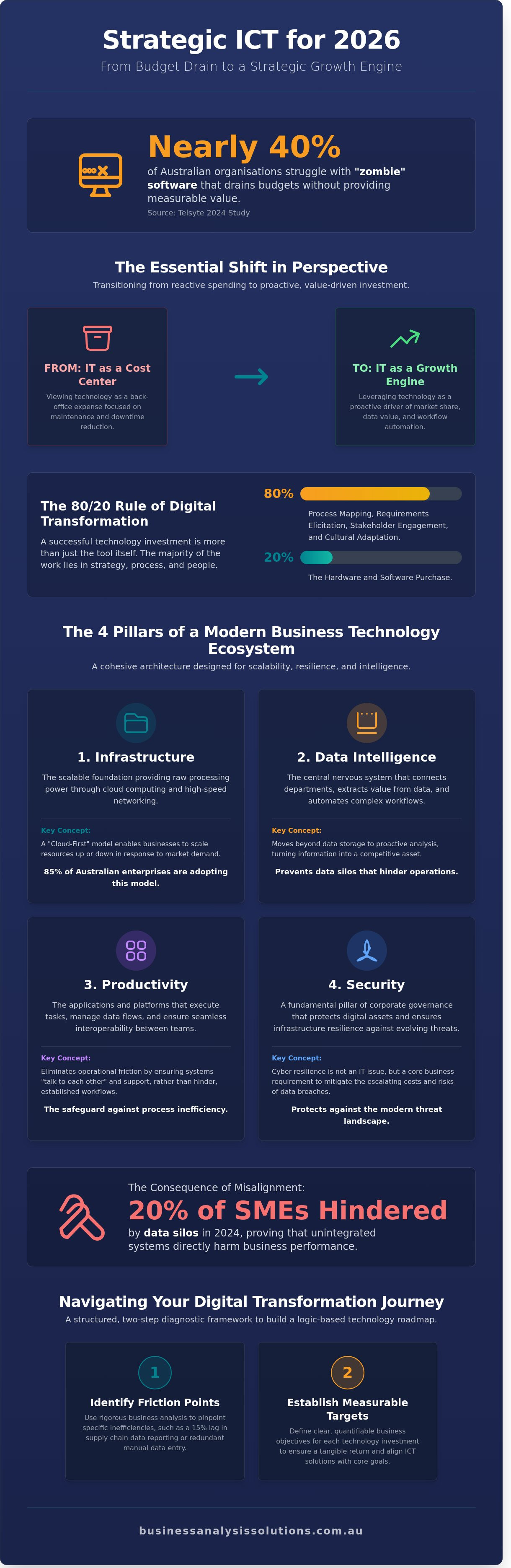
A 2024 study by Telsyte found that nearly 40% of Australian organisations struggle with "zombie" software that drains budgets without providing measurable value. You've likely noticed that simply increasing your investment in business technology doesn't automatically translate to smoother operations. When systems don't talk to each other, your team spends more time managing tools than delivering results. It's a common frustration that usually stems from a lack of high level IT leadership during the procurement phase.
We understand that the current climate of rising cybersecurity threats and fragmented digital workflows requires a more disciplined approach. This guide provides a strategic framework to align your ICT solutions with specific business objectives to drive tangible efficiency. We'll outline the exact steps to move from reactive IT spending to a proactive, logic based technology roadmap for 2026, ensuring your next investment solves a core organisational problem. This approach ensures that your infrastructure remains resilient against the evolving threats currently facing the Australian market.
Key Takeaways
Transition from viewing technology as a back-office expense to a strategic growth engine that aligns ICT solutions with your core organisational objectives.
Identify the four essential domains of a high-performing business technology ecosystem and learn how to achieve seamless interoperability between infrastructure and data intelligence.
Discover why rigorous business analysis and precise requirements elicitation are the primary safeguards against project failure and process inefficiency.
Address the escalating costs of data breaches in the Australian market by repositioning cybersecurity as a fundamental pillar of corporate governance.
Follow a structured, two-step diagnostic framework to identify operational friction points and establish measurable targets for your digital transformation journey.
Table of Contents Understanding Business Technology in the 2026 Landscape The Core Pillars of a Modern Business Technology Ecosystem Why Technology Requires a Foundation of Business Analysis Securing the Digital Frontier: Governance and Cyber Resilience Navigating Your Digital Transformation Journey
Understanding Business Technology in the 2026 Landscape
Business technology is the deliberate integration of Information and Communication Technology (ICT) solutions, data architecture, and operational processes to meet specific commercial objectives. It's no longer a collection of isolated tools. Instead, it represents a unified ecosystem where hardware and software are governed by a strategic logic that dictates how an organisation functions. By 2026, the distinction between a company's physical operations and its digital infrastructure has effectively vanished.
The transition from viewing technology as a back-office cost to a strategic growth engine is complete. In the past, IT departments focused on maintaining servers and reducing downtime. Now, the priority is leverage. Modern enterprises use business technology to extract value from data and automate complex workflows. This shift requires a rigorous application of business analysis. Without it, technology remains a passive asset. With it, it becomes a proactive driver of market share. To manage this effectively, many organisations adopt the principles of Business Technology Management to align their technical investments with long-term corporate vision.
A functional understanding of this landscape requires distinguishing between three core pillars:
Hardware: The physical infrastructure, including edge computing devices and high-speed networking, that provides the raw processing power.
Software: The applications and AI-driven platforms that execute tasks and manage data flows.
Strategic Logic: The business-centric "why" that connects the two, ensuring every technical deployment solves a human or operational problem.
The Evolution of ICT in Modern Australian Enterprises
The Australian market has moved rapidly from on-premise server rooms to cloud-native, AI-integrated environments. Data from 2024 indicated that 85% of Australian enterprises were transitioning to a cloud-first model, a trend that's now the standard for 2026. This evolution isn't just about storage; it's about scalability. In a volatile economic climate, the ability to scale ICT resources up or down in response to demand is a survival trait. However, buying the tool is only 20% of the digital transformation journey. The remaining 80% involves the difficult work of process mapping, stakeholder engagement, and cultural adaptation. If the humans in the building don't understand how to use the data, the tool is a sunk cost.
Why Strategic Alignment is the 2026 Competitive Advantage
Strategic alignment ensures that every ICT consultancy engagement begins with a problem, not a product. In 2026, the competitive advantage doesn't go to the firm with the biggest budget, but to the one with the tightest alignment between its tech stack and its operational goals. Off-the-shelf solutions often fail because they force a business to change its successful processes to fit a generic software's limitations. Conversely, a tailored ICT solution architecture starts by identifying specific inefficiencies, such as a 15% lag in supply chain data reporting. It then builds a technical bridge to close that gap. This methodical approach eliminates waste and ensures a clear return on investment for every digital initiative.
The Core Pillars of a Modern Business Technology Ecosystem
A robust business technology framework isn't just a collection of software; it's a cohesive architecture designed for scalability. We categorise this into four essential domains: Infrastructure, Data Intelligence, Productivity, and Security. These pillars must interoperate seamlessly to prevent the data silos that hindered 20% of Australian SMEs in 2024. A successful digital transformation blueprint relies on these pillars functioning as a single unit. Think of Business Intelligence as the central nervous system. It connects every department, ensuring that a change in one area triggers a logical response in another. This alignment is a core component of a modern business and technology curriculum, which prepares leaders to manage these complex interdependencies with precision.
Cloud Computing and Distributed Infrastructure
Cloud computing serves as the foundational layer for 2026 operations. Relying on a single provider creates unnecessary risk. 65% of enterprise leaders now opt for hybrid or multi-cloud environments to ensure redundancy and cost-efficiency. On-site, connectivity is just as vital. High-performance mesh Wi-Fi is the standard for modern Australian offices, eliminating dead zones and supporting a mobile, agile workforce that demands 99.9% uptime. For those navigating the complex landscape of high-speed business connectivity, Broadconnect offers the telecommunications expertise needed to maintain peak performance. To complement these digital upgrades, ensuring the physical workspace is equally functional is vital; WDC Services specializes in professional kitchen and bathroom renovations for Melbourne commercial clients, ensuring staff facilities match the high standards of their digital tools.
Data Analytics and Business Intelligence Tools
Raw data has zero value without context. Platforms like Power BI transform disparate data points into actionable insights. In 2026, executive leadership teams can't wait for end-of-month reports. Real-time reporting provides a live view of KPIs, allowing for immediate strategic adjustments. This level of visibility is what separates market leaders from those struggling with legacy processes. It's about moving from reactive management to proactive strategy.
Artificial Intelligence and Productivity Tools
Generative AI has moved from a novelty to a daily operational requirement. Tools like Microsoft Copilot enhance workforce productivity by automating routine documentation and data synthesis. However, deployment requires strict AI governance. You've got to establish clear protocols to ensure data privacy and ethical use. This protects your intellectual property while leveraging automated efficiencies that can save the average employee 5 to 10 hours per week. If your current business technology setup feels fragmented, our team can help you achieve strategic alignment across these four pillars.
Why Technology Requires a Foundation of Business Analysis
The primary reason 68% of technology projects fail to meet their original goals is a lack of clear business requirements. Many Australian enterprises treat business technology as a silver bullet; yet software cannot compensate for structural inefficiency. Technology is a force multiplier for the processes it inhabits. If those processes are flawed, the technology merely amplifies those flaws at scale. This leads to the 'garbage in, garbage out' principle, where poor data or illogical workflows produce automated errors that are harder to trace and more expensive to rectify. Logic must always precede code.
A structured approach ensures that every investment aligns with a specific operational outcome. Without this foundation, companies often find themselves with expensive licenses for features they never use. A 2024 study of mid-sized firms in Sydney and Melbourne found that 22% of software spend was wasted on redundant or misaligned functionality. Business analysis provides the rigorous framework needed to avoid these pitfalls by validating the necessity of every technical requirement before a single line of code is written or a vendor contract is signed.
The Dangers of Implementing Technology Without Process Mapping
Implementing a new CRM or ERP without first mapping the current state is a high-risk strategy. Automating a broken process ensures that errors occur faster and more frequently. Process mapping serves as the diagnostic phase, allowing teams to identify redundancies before they become permanent code. For example, a 2024 review of an Australian logistics firm's dispatch system revealed four manual data entry points that could be consolidated into one. By identifying this through a visual process map before procurement, the firm saved A$45,000 in unnecessary customisations. It's a pragmatic step that turns complexity into a clear, actionable sequence.
Visual Clarity: Process maps reveal bottlenecks that are often invisible in standard text-based manuals.
Waste Elimination: Identifying 'non-value-add' steps ensures you aren't paying to automate activities that shouldn't exist.
Standardisation: Mapping creates a unified way of working that software can then support consistently.
Bridging the Gap Between Technical Capability and Business Objectives
A business analyst acts as the translator between technical teams and commercial stakeholders. This role is vital for requirements elicitation, which is a structured process that uncovers the actual needs of the business rather than just the desires of individual users. Effective elicitation prevents scope creep, which inflated project costs by an average of 43% in 2023 according to Australian industry benchmarks. High levels of stakeholder engagement ensure that the final business technology solution aligns with strategic objectives. Without this alignment, organizations risk investing in high-performance tools that solve the wrong problems. Professional analysis provides the clarity required to ensure every dollar spent on software delivers a measurable return.
Securing the Digital Frontier: Governance and Cyber Resilience
Cybersecurity isn't a peripheral IT concern. It's a foundational element of business technology that dictates organizational longevity. By 2026, the financial impact of cybercrime in Australia is projected to exceed A$4.5 billion annually. For a mid-sized Australian firm, a single data breach now carries an average cost of A$4.3 million. This figure includes legal fees, lost productivity, and the long-term erosion of brand equity. Leaders must view security through the lens of governance rather than technical troubleshooting. Regular business efficiency diagnostics serve as a critical tool here. These assessments identify where fragmented processes create security vulnerabilities, ensuring that protection is integrated into every operational workflow.
Implementing the Essential 8 Framework
The Australian Signals Directorate developed the Essential 8 as a baseline for cyber resilience. These strategies, which include application control, patch management, and restricted administrative privileges, mitigate approximately 85% of targeted cyberattacks. Compliance is no longer optional for those seeking to maintain professional trust. In 2026, 68% of Australian consumers report they'll abandon a brand following a data leak. Implementing these controls provides a structured, logical path to maturity that protects both data and reputation.
Strategic ICT Leadership and the Fractional CIO Model
Many Australian SMEs lack the A$250,000 annual budget required for a full-time Chief Information Officer. This resource gap often leads to fragmented business technology decisions driven by vendor sales targets rather than internal strategy. A Fractional CIO solves this by providing high-level oversight on a flexible, part-time basis. This model delivers objective advice on technology vendor selection without the executive overhead. You gain a partner who prioritizes strategic alignment and ensures that technical investments support specific commercial objectives. This leadership bridges the gap between complex technical requirements and the pragmatic needs of the boardroom.
Build a resilient foundation for your organization by booking a strategic technology audit today.
Navigating Your Digital Transformation Journey
Implementing effective business technology requires a transition from reactive purchasing to proactive orchestration. Success isn't found in the software itself but in the methodology used to integrate it into existing Australian operations. A structured four-step framework ensures that capital expenditure translates into measurable operational maturity rather than technical debt.
The Business Efficiency Diagnostic: Identifying High-Impact Opportunities
The journey begins with a Business Efficiency Diagnostic to isolate friction. This process involves rigorous stakeholder engagement, technical audits, and data reviews to uncover bottlenecks that currently cost Australian SMEs an average of 21% in lost productivity annually. By mapping current workflows, firms identify "quick wins" where minor configuration changes deliver immediate ROI. This methodical approach stands in stark contrast to impulsive technology purchasing, which often results in fragmented systems that fail to communicate. A diagnostic provides the empirical evidence needed to justify investment and ensures the solution addresses root causes.
Once friction points are clear, leadership must define measurable objectives. Whether the goal is reducing customer churn by 15% or cutting procurement cycles by five business days, these metrics anchor the project in reality. Without these benchmarks, technology projects often drift into scope creep. This lack of direction frequently leads to budget overruns that can exceed 40% of the original estimate, a risk no growing firm should ignore.
Developing a Digital Transformation Blueprint for Scalable Growth
A Digital Transformation Blueprint serves as the definitive roadmap for your organisation's evolution. It details the technical architecture, implementation timelines, and precise budget allocations for a 3 to 5 year outlook. Crucially, it incorporates change management strategies to ensure staff adoption remains high during the transition. You can Request a Business Efficiency Diagnostic to begin this strategic journey and secure a roadmap tailored to the Australian regulatory environment.
The final phase involves execution through professional ICT project management. This stage focuses on delivering the blueprint on time and within the agreed A$ budget. Professional oversight ensures that technical requirements align with business objectives at every milestone, preventing the disconnect between IT departments and executive leadership. By following this sequence, organisations move beyond mere digitisation and achieve true digital transformation.
Step 1: Conduct a Diagnostic to isolate specific operational friction.
Step 2: Set measurable KPIs, such as a 10% increase in billable hours.
Step 3: Formalise a 3 to 5 year technology roadmap through a Blueprint.
Step 4: Deploy solutions via structured ICT project management protocols to ensure on-time delivery.
Mastering Your Strategic Digital Evolution
Navigating the 2026 landscape requires more than just adopting the latest software. Success depends on a mature business technology ecosystem where strategic alignment and cyber resilience are integrated into the core architecture. You've seen how a rigorous foundation of business analysis prevents the common pitfalls of digital transformation, ensuring every ICT investment delivers a measurable return. Australian firms must prioritise governance to protect their digital frontier while maintaining the agility needed to scale effectively.
At Business Analysis Solutions, we apply over 20 years of industry experience to help you navigate these complexities. Our logic-driven approach focuses on bridging the gap between technical requirements and your overarching commercial goals. We don't guess; we use structured methodologies to ensure your systems are robust, efficient, and fully integrated. Our team provides the clarity needed to untangle organisational complexities and drive tangible value across your entire operation.
Optimise your business technology with a professional diagnostic
Taking the first step toward a streamlined digital future ensures your organisation remains resilient and ready for whatever challenges the Australian market presents next.
Frequently Asked Questions
What is business technology in simple terms?
Business technology refers to the combination of hardware, software, and data management tools used to achieve organisational goals. It acts as the digital infrastructure that enables a company to execute its strategy and manage daily operations. In the Australian market, this includes everything from local cloud hosting to specialised accounting software like Xero. It's the bridge between a business problem and a technical solution that drives measurable value.
What are the four main types of business technology?
The four primary categories are communication technology, networking technology, information technology, and operations technology. Communication tools like Microsoft Teams facilitate internal collaboration. Networking covers the physical and virtual infrastructure. Information technology focuses on data processing and storage. Operations technology includes hardware and software that controls physical processes. These four pillars work together to create a cohesive business technology ecosystem that supports long-term growth and stability.
How does business technology improve operational efficiency?
Technology improves efficiency by automating repetitive tasks and reducing manual data entry errors by up to 40% in administrative workflows. By integrating systems through process mapping, organisations eliminate data silos. This allows staff to focus on high-value strategic tasks rather than technical debt. A structured approach ensures that every software implementation directly correlates to a measurable reduction in lead times or overhead costs for the firm.
Why do most business technology implementation projects fail?
Failure often stems from poor requirements elicitation and a lack of stakeholder engagement; 70% of digital transformations miss their ROI targets. Projects fail when the technical solution doesn't align with the actual business process. Without a clear strategy, firms often purchase software that complicates rather than simplifies. Success requires a methodical approach that prioritises business needs over the latest technical trends or marketing promises.
What is the difference between IT support and ICT consultancy?
IT support focuses on maintaining existing systems and fixing hardware or software issues as they arise. ICT consultancy provides strategic advice to align technology with long-term business objectives. While a support desk handles a crashed laptop, a consultant performs process mapping to identify gaps in the digital architecture. Consultants focus on growth and return on investment, whereas support focuses on stability and system uptime.
How much should a business invest in technology each year?
Australian businesses typically allocate between 3% and 7% of their annual revenue toward technology investments. For a firm with A$5 million in turnover, this equates to a budget of A$150,000 to A$350,000. This figure includes software licensing, cybersecurity, and strategic consulting. Allocating less than 3% often leads to technical obsolescence and increased security risks within three years, which can be far more costly to rectify.
Is AI considered a core business technology for small businesses?
AI is now a core component of the tech stack for Australian SMEs, particularly in customer service and data analysis. Tools like automated chatbots and predictive inventory management can reduce operational costs by 15% within the first year. Small businesses use these tools to compete with larger firms by scaling their output without a proportional increase in headcount. It's no longer a luxury but a requirement for market relevance.
How does business analysis help with technology selection?
Business analysis uses structured techniques like requirements elicitation to ensure a chosen platform solves specific organisational challenges. This methodical approach prevents the "shiny object syndrome" where firms buy software based on hype. By conducting a gap analysis, a professional ensures the technology integrates seamlessly with existing workflows. This objective evaluation typically increases the success rate of software adoption by 55% compared to ad-hoc selections.



Comments